Esch and Medea falling for the wrong guy
"In Mythology, I am still reading about Medea and the quest for the Golden Fleece. Here is someone I recognize. When Medea falls in love with Jason, it grabs me by the throat. I can see her. Medea sneaks Jason things to help him: ointments to make in invincible, secrets in rocks. She has magic, could bend the natural to the unnatural. But even with all her power, Jason bends her like a young pine in a hard wind; he makes her double in two. I know her," (pg 38).
This is the first time (as far as I know) that Esch explicitly refers to Medea and also compares herself to Medea. In this quote, Esch shows why she sees herself in Medea. They both are powerful in their own ways, but even though they are powerful, their hearts are still broken by their men. At this point in the text, we haven't seen Manny break Esch's heart yet and so this allusion is also a form of foreshadowing in the fact that Manny will not be by Esch's side through her pregnancy. This allusion also reveals a lot about her setting and some central themes in that Esch doesn't have many women in her life that she can relate to. This shows that the characters around Esch are mainly male and it also sets up the theme of Esch comparing herself to and learning from non-human female characters like China and hurricane Katrina.
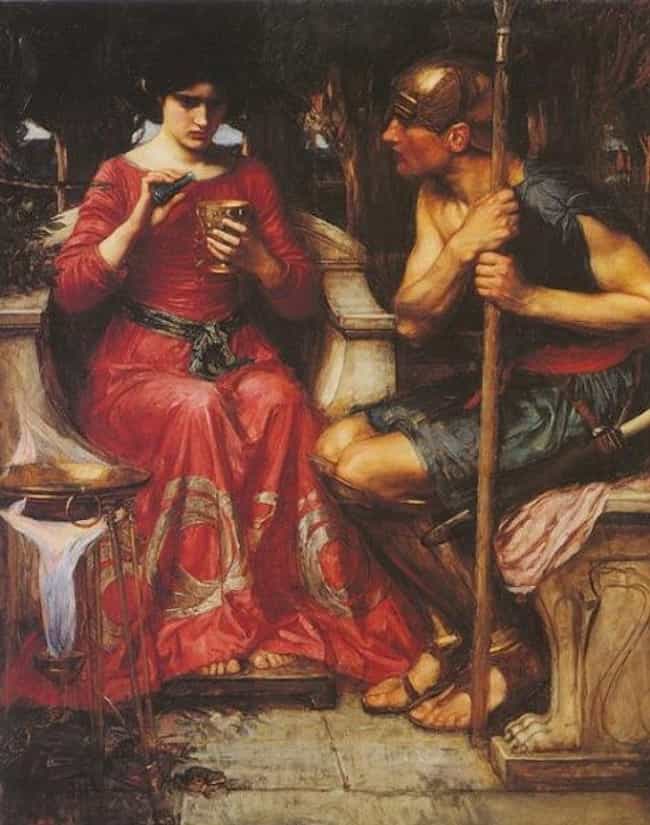
This depiction of Jason and Medea is the most famous and was created by John William Waterhouse in 1907. This depiction shows Medea creating an ointment for Jason to make him invincible when he yokes the bronze bulls and fights the skeleton warriors.

I think that this image accurately symbolizes Esch by the end of the novel because she decides that she doesn't actually need Manny and she realizes she's better off without him so she basically 'kills' him off from her life and moves on. In the painting, where the man is laying, it is very messy just like Esch's life when she was around Manny. Now that she has 'killed' him, she can move on from her old messy life. This was painted by French artist Paul-Jacques-Aimé Baudry in 1860.


Comments
Post a Comment